
























Pronated vs. Supinated Grip: Training Benefits, Differences, and How to Use Them
Grip orientation changes how an exercise feels, which muscles contribute to the movement, and how the shoulders, elbows, and wrists are positioned under load.
The two most common options are the pronated grip, where the palms face away from you, and the supinated grip, where the palms face toward you. Both appear across pull-ups, chin-ups, rows, pulldowns, curls, deadlifts, and other strength movements.

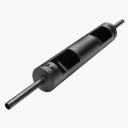
Neither is universally better: the right grip depends on the exercise, the athlete, and the intended training effect. Rogue pull-up bars and cable attachments, like the Crown Pull-Up Bar and the CG-1X X Grip Cable Attachment, let athletes train multiple hand positions from the same station without changing the underlying movement pattern.

Pronated Grip
A pronated grip is an overhand grip where the palms face away from the athlete on a pull-up bar, or toward the shins on a deadlift. The pronated grip changes the relationship between the forearm, elbow, and upper arm compared with a supinated grip, and tends to make pulling movements feel more back-focused.
The pronated grip increases contribution from the latissimus dorsi, the large back muscle responsible for width and thickness, making it a useful choice when building the back is the goal.
Common pronated-grip exercises:
- Pull-ups
- Barbell rows
- Lat pulldowns
- Overhand barbell curls (reverse curls)
- Conventional deadlifts
- Barbell bench press
- Dumbbell rows

Supinated Grip
A supinated grip is an underhand grip where the palms face toward the athlete. The chin-up and the barbell curl are the two most familiar examples.
Supination changes the position of the forearm and elbow and increases the contribution of the elbow flexors, the muscles, primarily the biceps and brachialis, that bend the elbow, making pulling movements feel more arm-focused.
For athletes who find pronated pull-ups difficult, supinating the grip can serve as a useful progression toward pronated pull-ups.
Common supinated-grip exercises:
- Chin-ups
- Underhand lat pulldowns
- Underhand rows
- Barbell curls
- Dumbbell curls
- Supinated cable curls
Grip Width and Other Training Variables
Grip orientation is only one part of the equation. Changing from pronated to supinated is not the same as changing hand width. A wide pronated pull-up, a shoulder-width pronated pull-up, and a shoulder-width supinated chin-up each create different joint positions and loading patterns.
When choosing a grip, also consider:
- Grip width: Narrow, shoulder-width, or wide
- Range of motion: Use a range you can control
- Load: Select a weight that allows consistent technique
- Exercise goal: Strength, hypertrophy, skill, or general training volume
- Individual comfort: The strongest grip on paper is not necessarily the best grip for every athlete
Choosing Between a Pronated and Supinated Grip
The pronated grip is the standard choice for pull-ups, rows, and pulldowns, and emphasizes the lats for back width and thickness. The supinated grip is the standard choice for chin-ups and curls, and emphasizes the biceps and forearms for arm size and strength.
Choose the Pronated Grip if:
- You’re training standard pull-ups, rows, or pulldowns
- You want a back-focused pulling variation
- You’re building width and thickness through the lats
Choose the Supinated Grip if:
- You’re training chin-ups or curls
- You want greater involvement from the elbow flexors and biceps
- You’re using it as a progression toward strict pronated pull-ups

Training Both Grip Positions
Strength training doesn’t need to rely on one grip for every pulling exercise. Alternating between pronated, supinated, and neutral grips varies the loading pattern while keeping the underlying movement familiar. The CG-1X X Grip Cable Attachment provides neutral, pronated, and supinated options from the same station, making it possible to change hand position without changing the setup.
1. Vertical Pulling: Strength Focus
- Weighted pronated pull-up: 4 x 4-6
- Supinated chin-up: 3 x 6-8
- Cable row: 3 x 8-12
2. Back and Arm Training: Hypertrophy Focus
- Pronated lat pulldown: 3 x 8-12
- Supinated low row: 3 x 8-12
- Supinated curl: 3 x 10-15
3. Skill and Bodyweight Training
- Scapular pull-ups
- Controlled ring rows
- Assisted pronated pull-ups
- Assisted supinated chin-ups
- Strict pull-ups or chin-ups
The goal isn’t a shortcut through grip selection. It’s building the strength required to control your body through the full range of motion.
Programming Grip Variation
Grip variation matters most for athletes doing a high volume of pulling work. Instead of repeating the same hand position for every set, program a mix of pronated and supinated grips across exercises or training days to distribute the load across the back, arms, and forearms.