




























Barbell vs. Trap Bar Deadlift: Which Is Better?

The barbell and trap bar both let you deadlift heavy, but they load your hips, spine, and legs differently. The barbell is usually the better choice for powerlifting, Olympic lifting, and hip-dominant hinge work, while the trap bar is often the better option for general training, field-sport athletes, and anyone who wants a heavy pull with less stress on the lower back. The real question isn’t which bar is best, it’s which bar is best for your training goals. Here’s how the two compare, and how to decide which one fits your training.
Barbell Deadlift
- Bar path sits in front of you, keeping the load slightly forward and increasing posterior chain demand
- Requires more forward torso lean, making it a more hip-dominant movement
- Builds lower back, hip, and hamstring strength
- Well suited for powerlifting and Olympic lifting
- More technically demanding: the knees need to clear the bar path
- Also used for squats, presses, and pulls
Trap Bar Deadlift
- Stand inside the diamond-shaped frame with the weight balanced at mid-foot
- Overhand grip only
- More upright setup lets the hips sit slightly lower, shifting the movement toward the quads and reducing lower back emphasis
- No bar path to negotiate, making it a strong option for beginners
- Also used for shrugs, farmer’s carries, and jumps
Bar Options
Barbell:
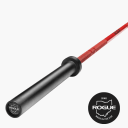
- Multi-Purpose Bar: A balanced mix of full but non-aggressive knurl, whip, and stiffness that works well across many lifts
- Power Bar: Very stiff with an aggressive knurl for a secure grip, with little to no whip or flex
- Deadlift Bar: A dedicated specialty bar with an aggressive knurl for grip and more flex than any other barbell we offer
Trap Bar:
- TB-1 Trap Bar: One set of handles
- TB-2 Trap Bar: Adds a second, higher set of handles, useful for lifters with limited mobility or for training a partial range of motion
Choosing Between the Two
The barbell builds a stronger hinge, targets the hamstrings and spinal erectors more directly, and transfers into clean and snatch pulls or pin pulls. It’s the better choice for powerlifting, Olympic lifting, and strongman.
The trap bar gets you strong with a simpler setup and less lower back demand. It loads the legs hard without a big hinge requirement, trains jumping and acceleration, and lets beginners pull heavy sooner.
For most general gym-goers, the trap bar is the better default deadlift. For lifters chasing a bigger conventional or sumo pull, the barbell should stay the main lift.
Choose the Trap Bar if:
- You’re new to deadlifts or have back issues
- You want athletic power and explosiveness
- You prefer quad-dominant pulling
Choose the Barbell if:
- You compete in powerlifting or Olympic lifting
- You want maximum posterior chain focus
- You want the classic barbell deadlift
Using Both
Most lifters don’t need to choose one over the other. Use the trap bar for volume, heavier sets, or when deloading, and the barbell for specificity and general strength development. They complement each other well.
Form First
Regardless of which bar you use, prioritize form:
- Brace your core
- Keep a flat back and resist spinal flexion under load
- Drive through your heels, pushing the floor away
- Raise your hips and shoulders together
- Keep your arms long and your upper back engaged
Start light and progress the load as your technique holds up.