



























BARBELL CARE & MAINTENANCE
Barbell Care & Maintenance
Complete Guide to Barbell Care
A barbell is a long-term training tool, not a disposable piece of equipment. With basic, consistent care, a quality bar will perform the same years from now as it does on day one. The process isn’t complicated, but understanding why different finishes behave the way they do, and how to maintain them correctly, makes a real difference in the bar’s feel, spin, and overall lifespan.
This guide breaks down the most common barbell finishes, what to expect from each over time, and how to keep your bar working as intended.
Understanding Barbell Finishes
Barbell finishes exist to balance three things: grip feel, corrosion resistance, and durability. No finish is completely maintenance-free, but some require less attention than others.
Zinc
Zinc is a traditional, sacrificial coating. It protects the steel by wearing away slowly over time rather than allowing the steel underneath to oxidize. Because the coating is thin, zinc keeps the knurl feel as close to a bare steel feel as possible while still providing corrosion protection. Zinc is also the most cost-effective coatings making bars like the Rogue Bar 2.0 a popular all-around option.
Over time, zinc will dull and wear—this is expected and not a defect. To prevent oxidation underneath the coating, the knurling needs to be cleaned regularly. Chalk, sweat, and debris trapped in the knurl accelerate wear if left untreated.
E-Coat
E-Coat is commonly used in the automotive industry for high-wear components, including undercarriage parts exposed to moisture and road salt. It offers excellent corrosion resistance and long-term durability.
Compared to zinc, E-Coat is slightly thicker. Most athletes won’t notice a difference in knurl feel unless comparing bars side by side. The tradeoff is reduced maintenance demands and a finish that holds up well in humid or high-use environments. You can find this finish on our most popular multi-purpose Ohio Bar as well as an old school staple in the Rogue Curl Bar.
Cerakote
Cerakote is one of the most protective finishes available. It provides strong corrosion resistance while allowing for color customization and detailed logos. The process we use to create bars with a Cerakote coating also makes them some of the most durable bars in our lineup. This process is called Rogue Work Hardening (RWH™) and contributes to the F Scale™ of a barbell, measuring its durability.
Because it’s a thicker coating, the knurl feel is slightly more muted than bare steel or zinc. Cerakote bars benefit from regular knurl cleaning to prevent chalk buildup, but they’re highly resistant to rust when properly maintained. This is why this finish has over time become one of the most sought after coating options for all types of training environments, from high level training facilities to home gyms.
Stainless Steel
Stainless steel bars are not coated. Instead, the steel itself offers corrosion resistance. This provides the most direct knurl feel available while still protecting against oxidation, making it one of the most premium options you can get for a barbell. You can find this fully stainless option, to include stainless steel sleeves, on bars like the Pyrros Bar, our highest-end competition weightlifting barbell.
Maintenance is minimal. Regular brushing to clear chalk from the knurl is usually sufficient. Stainless bars can still develop surface discoloration if neglected, but they’re the most forgiving option overall.
Black Oxide
Black Oxide is a conversion coating, not a plating. Similar to a bare steel barbell, it offers an excellent knurl feel because it does not fill in the texture of the steel.
It provides mild corrosion resistance but requires routine care, especially in humid climates. Over time, black oxide bars develop a natural patina. This is normal and does not affect performance or longevity when the bar is properly maintained.
This combination of knurl feel and the way the bar will age over time is a reason we chose this finish for our first barbell we started making.
Chrome on Barbells
Chrome has been the standard barbell coating for decades, but it performs differently depending on where it's used. Here's why chrome works well on sleeves but falls short on shafts over time.
Chrome on Shafts
Chrome offers strong wear resistance but lacks ductility, meaning it doesn't flex well when a bar bends under load. During normal lifting, this repeated flexing creates microscopic cracks in the chrome plating, most often in the knurl.
These micro-cracks trap sweat and chalk, putting salt into direct contact with the steel. This starts corrosion cells that spread beneath the chrome and are difficult to stop once established. Third-party testing confirms this, shown in the F-Scale durability comparison table.
Chrome bars require aggressive, frequent knurl cleaning to manage this risk. For long-term durability and predictable performance, Rogue does not use chrome finishes on barbell shafts.
Chrome on Sleeves
Sleeves don't flex the way shafts do, so chrome's lack of ductility isn't a factor there. Rogue's testing confirms chrome remains an excellent, wear-resistant coating for sleeves, and Rogue will continue to use it for this application.
How to Clean Your Barbell
Routine bar care starts with keeping the shaft clean and lightly protected. Sweat, chalk dust, and airborne moisture settle on the steel during every session, even if the bar looks clean. After use, wiping the shaft down and, depending on the coating, periodically applying a light coat of 3-in-1 oil helps create a thin protective barrier that slows oxidation without affecting grip. The steel should absorb the oil—not feel wet or slick. Excess oil only attracts more chalk and debris.
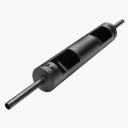
To make the job easier and more effective, explore our barbell cleaning tools designed specifically for maintaining your bar’s knurling and finish.
Knurl Care
The knurl is where buildup hides and where corrosion is most likely to start. Chalk holds moisture, sweat introduces salts, and the sharp texture traps both deep in the pattern. If ignored, this dulls the knurl and accelerates surface corrosion.
Use a plastic bristle brush, never steel, to clear debris without damaging the finish. In high-use or humid environments, weekly cleaning is recommended. Home gyms or dry climates can typically manage with monthly maintenance. For bars that are coated with Cerakote or are stainless steel, simply brushing any debris from the knurl is all that is needed. For other coatings, see the below step-by-step guide to cleaning your barbell shaft.
Step-by-Step Guide: How to Clean Your Barbell Shaft
Dry Wipe the Shaft
Start by wiping the entire shaft with a clean, dry towel to remove loose chalk, sweat, and surface dust. Do this even if the bar looks clean—contaminants build up every session.Brush the Knurling
Use a plastic bristle brush (never steel). Brush with the direction of the knurl, not across it, to clear chalk and debris trapped deep in the pattern without damaging the finish.Apply Light Oil (When Needed)
Depending on the bar’s finish and environment, apply a small amount of 3-in-1 oil to the shaft. Use a towel or the plastic brush to work the oil lightly into the knurl.Let the Oil Set
The goal is protection, not lubrication. Give the oil a minute to settle into a thin film over the steel. If the bar feels wet or slick, you've used too much.Wipe Off Excess Oil
Finish by wiping the shaft with a clean, dry towel to remove any remaining oil. Excess oil attracts chalk and dust and can accelerate buildup.
Step-by-Step Guide: How to Clean Your Barbell Shaft
Dry Wipe the Shaft
Start by wiping the entire shaft with a clean, dry towel to remove loose chalk, sweat, and surface dust. Do this even if the bar looks clean—contaminants build up every session.Brush the Knurling
Use a plastic bristle brush (never steel). Brush with the direction of the knurl, not across it, to clear chalk and debris trapped deep in the pattern without damaging the finish.Apply Light Oil (When Needed)
Depending on the bar’s finish and environment, apply a small amount of 3-in-1 oil to the shaft. Use a towel or the plastic brush to work the oil lightly into the knurl.Let the Oil Set
The goal is protection, not lubrication. Give the oil a minute to settle into a thin film over the steel. If the bar feels wet or slick, you've used too much.Wipe Off Excess Oil
Finish by wiping the shaft with a clean, dry towel to remove any remaining oil. Excess oil attracts chalk and dust and can accelerate buildup.
Sleeve Maintenance & Spin Restoration
Sleeves accumulate dust, chalk, and moisture over time, which can reduce spin. This is almost always a lubrication issue rather than a mechanical problem. Maintaining bar spin is also easier than you might think, and does not require you to disassemble your barbell.
Stand the bar vertically and apply a small amount of 3-in-1 oil where the sleeve meets the shaft. Let gravity draw the oil into the bushing or bearing system and allow it to sit for several hours or overnight. Afterward, rotate the sleeve to distribute the lubricant and loosen debris, then repeat on the opposite side. Bars that have gone long periods without maintenance may require multiple applications to fully restore smooth, consistent spin.
Step-by-Step Guide: How to Maintain Barbell Sleeve Spin
Inspect the Sleeves
If sleeve spin feels slow, gritty, or uneven, buildup is likely the cause. Dust, chalk, and moisture accumulate over time and interfere with smooth rotation.Stand the Bar Vertically
Position the bar upright with one sleeve on the floor. This allows gravity to help pull lubricant into the internal bushing or bearing system.Apply Light Oil at the Collar
Apply a small amount of 3-in-1 oil at the junction where the sleeve meets the shaft. Do not flood the area, controlled application works best.Let the Oil Penetrate
Leave the bar standing for several hours or overnight. This gives the oil time to migrate inward and loosen debris.Rotate the Sleeve
After resting, spin the sleeve repeatedly to distribute the lubricant and break up any remaining buildup.Repeat on the Other Side
Flip the bar and repeat the process for the opposite sleeve.Reapply if Necessary
Bars that have gone long periods without maintenance may need multiple treatments to fully restore smooth, consistent spin.
Step-by-Step Guide: How to Maintain Barbell Sleeve Spin
Inspect the Sleeves
If sleeve spin feels slow, gritty, or uneven, buildup is likely the cause. Dust, chalk, and moisture accumulate over time and interfere with smooth rotation.Stand the Bar Vertically
Position the bar upright with one sleeve on the floor. This allows gravity to help pull lubricant into the internal bushing or bearing system.Apply Light Oil at the Collar
Apply a small amount of 3-in-1 oil at the junction where the sleeve meets the shaft. Do not flood the area, controlled application works best.Let the Oil Penetrate
Leave the bar standing for several hours or overnight. This gives the oil time to migrate inward and loosen debris.Rotate the Sleeve
After resting, spin the sleeve repeatedly to distribute the lubricant and break up any remaining buildup.Repeat on the Other Side
Flip the bar and repeat the process for the opposite sleeve.Reapply if Necessary
Bars that have gone long periods without maintenance may need multiple treatments to fully restore smooth, consistent spin.
It’s rare that you’ll ever need to disassemble your barbell or replace internal components. Rogue barbells are built for long-term durability under heavy, repeated use. That said, high-volume training environments, improper storage, or years of wear can eventually lead to worn bushings, bearings, snap rings, or other hardware.
If you ever need to service your bar or replace parts, explore our barbell part kits for factory-spec replacement components designed to restore performance and keep your bar rotating as intended.
How to disassemble a barbell
What to Expect Over Time
A properly maintained barbell is built to perform for the long haul. While natural use may result in subtle cosmetic variation depending on finish and environment, the bar’s strength, spin, and grip remain consistent. These changes reflect training history—not a loss of performance or durability.
With basic care, a quality barbell will last decades—often a lifetime—without loss of performance.
If you ever have questions about bar care, maintenance, or restoring a bar, the Rogue team is available to help.